I just finished up my last didactic semester of PT school, and although the days were long, the semester flew by! I have been so busy with classes and research that I haven’t had much time to post, so let’s do a quick recap of the past year!
Since my last post about my acute care clinical, I returned to school for another semester of classes which was one of my favorite semesters yet! I took adult neuro II, pediatrics, an advanced prosthetics course, and the final musculoskeletal course of our curriculum. The semester had so many fun, hands-on labs and I enjoyed all of my classes, especially peds and neuro! It’s a good thing I loved my peds class because it has been all things peds since finishing the semester.

Outpatient Pediatrics Clinical Rotation
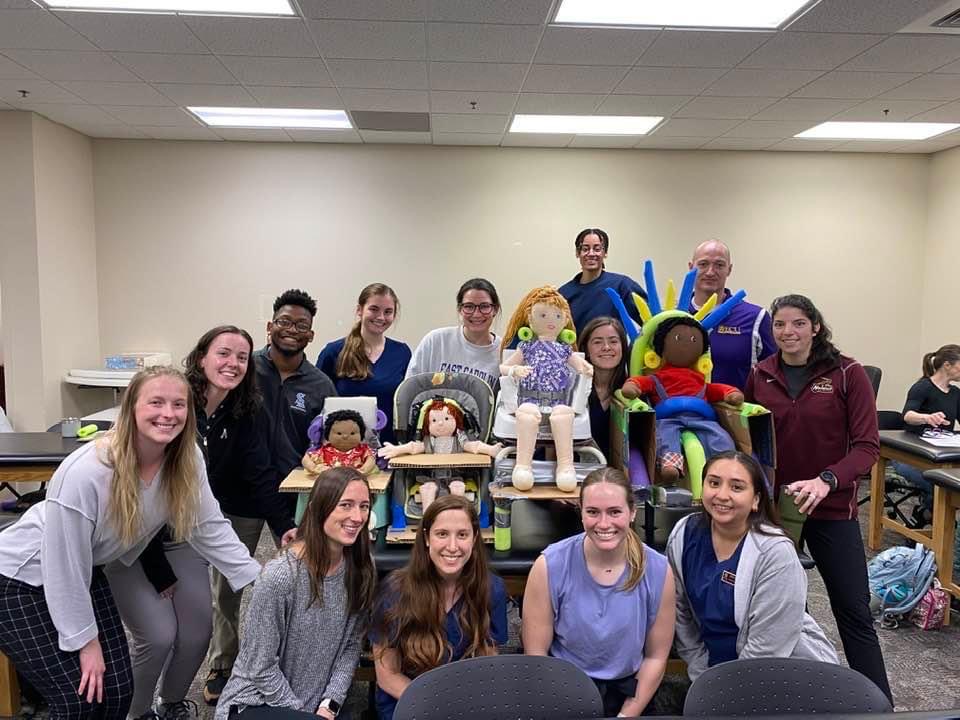
In May, I started my third clinical rotation in outpatient pediatrics which I absolutely loved! It was the most challenging one so far, but also the one where I feel like I grew the most. My clinical instructor had years of experience in peds, and I learned so much from her! Our caseload consisted of kids anywhere from 3 months-15 years with various conditions such as torticollis, developmental delay, cerebral palsy, down syndrome, and spina bifida. I became much more confident with gait and movement analysis, orthotics, outcome measures, parent education, different manual techniques, and so much more. I started out seeing 1 patient a day and gradually worked up to 6-8 patients. The clinic had a wonderful interprofessional team of speech, occupational, and physical therapists, and I enjoyed working closely with other therapists and learning more about their professions.
HABIT Camps
After clinical ended in July, I headed back to school for graduate assistant work as we prepared for our third Hand Arm Bimanual Intensive Training (HABIT) Camp for children with hemiplegic cerebral palsy. We hosted two this year — one in August and another in December. I’ll create a separate post on my graduate assistant work and HABIT as it has been one of my favorite experiences of PT school, but for now I’ll give you a brief overview. During HABIT camp, each child is paired with 1-2 PT students and 2-3 undergraduate students who provide them with 5 days (7 hours per day) of intensive therapy encouraging them to use both hands, rather than just their dominant one. The therapy is play-based to keep the children engaged, and we also have different group activities throughout the day. Planning the camp, performing all the pre-assessments, and then executing it is so much work, but it is so very rewarding! I love seeing the children improve and make progress towards their goals throughout the week.

Sports Skills Camp
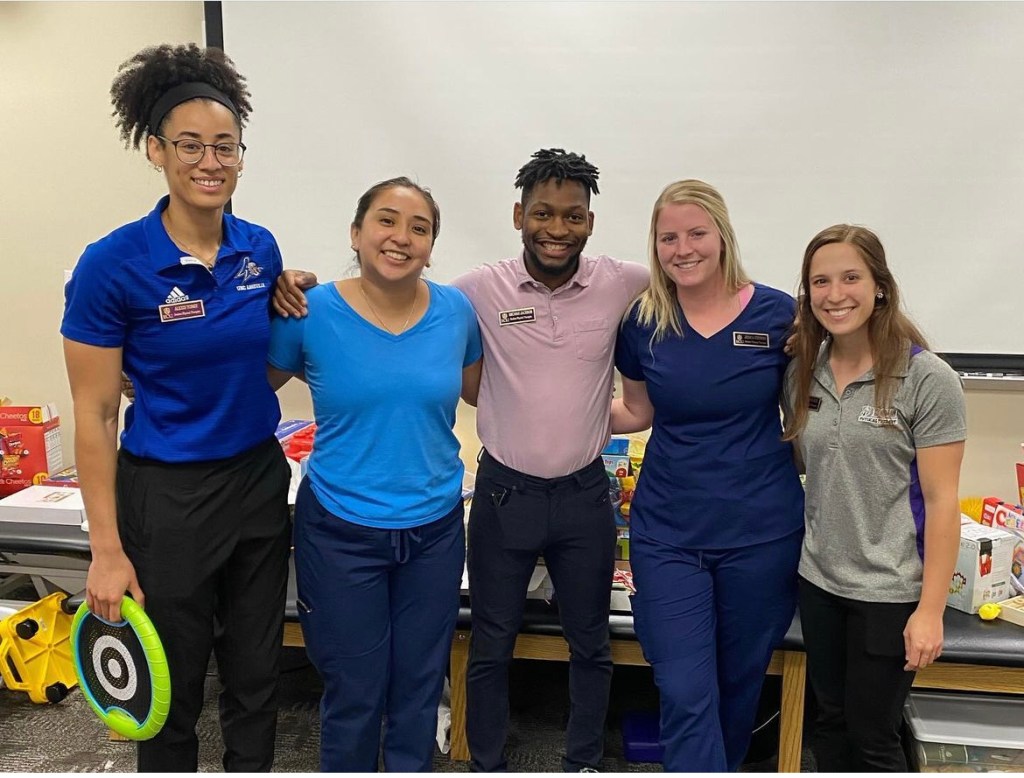
As part of our curriculum we take a health promotions class, which focuses on promoting healthy behaviors to help prevent the prevalence of non-communicable diseases. Physical therapists often have more one-on-one time with patients than other healthcare providers, which puts us in a great position to discuss health and wellness with our patients. A major part of this class was creating and/or executing a program in the community to promote a healthy behavior. For our project, my classmate and I partnered with a local pediatric clinic to create a Sport Skills Camp for children with functional impairments. Through this project, we aimed to help children explore different sports, become more confident, promote teamwork, and work on skills in a more real-world environment. Overall, we wanted to encourage physical activity and sports participation. The camp was once a week for 5 weeks, focusing on a different sport each week. Each day consisted of 30 minutes of stations to practice skills and 30 minutes of actual gameplay. The best words I can think of to describe this camp is controlled chaos. We had 8 kiddos with a wide range of abilities participate, and each week was so different. I never quite knew what to expect walking in, but everyone had a blast! Many of the kids had never played sports before, so it was awesome to see them trying new things and working as a team!
I have learned so much about the world of pediatrics over the past year. Here are some of my key takeaways…
Creativity is key…you will never know unless you try
Creativity is important no matter what field of PT you work in, but I’ve found it is even more crucial when working in peds. I am very much a perfectionist, and at the beginning of my clinical I often found myself doing many of the same things over and over because I didn’t want a new idea to “fail”. However, as I became more confident, and with a push from my CI, I began to explore new exercises and interventions. Many times my ideas didn’t work out, and that was okay! I learned from it and modified it to achieve what I was looking for. I am so thankful my CI pushed me to be more creative and try new things, because it has made me a much better therapist and added so many interventions to my toolbox!
Therapy has to be fun!
This goes along with creativity—you have to make PT fun! Unlike adults, most toddlers aren’t going to do a squat or go up the stairs on command. Instead, it’s “can you pick up this car off the floor for me?” or “let’s go get that toy at the top of the stairs!”. I became comfortable creating interventions around what the child wanted to do that day because giving them a choice can help them enjoy therapy more. Say a kiddo came in dying to play Pop the Pig. Sounds great! I can make an obstacle course with the pieces at one end and the game at the other. Obstacle courses are your best friend in peds because you can incorporate so many different interventions while keeping the child’s attention.
Don’t ever ask a child if they want to do something.
I have made the mistake many times, especially during HABIT camp, of asking a child if they want to do a particular activity or play a certain game. If you ask them, they are given the opportunity to say no which can lead to a very unproductive session. You don’t want to get stuck negotiating with a tiny human! Instead, say, “Let’s go do this!” or give them a choice between two activities. This way they still have a choice, but you get what you need also.
Oh the Documentation…
Documentation is probably every PTs least favorite part of their job, and with kids, you are not usually able to document during the session like you often can with adults. Additionally, my notes were much more detailed than they were in my orthopedic and acute care rotations. Once I started taking on more patients, I usually had about 2-3 hours of documentation to do after clinic. This led to many long, exhausting days and nights. However, this style of documentation really helped my critical thinking and clinical reasoning because not only did I document what I did or observed but also why. My efficiency with documentation did improve throughout my clinical, and I hope it continues to improve with experience.
Stairs and orthotics were a struggle at first.
There are always a couple things each clinical that really trip me up, and this clinical was no different. The first was stair training. It sounds simple and is not something I struggled with a lot in adults, but with kids it was a whole different ball game. Not only do you have to guard the child, but you also have to facilitate a reciprocal pattern, manage hand placement on the rail, and when the child is descending you are doing all of this while walking backwards down the stairs yourself. There are many moving parts and it took a lot of coordination on my end (which is something I don’t have a lot of haha). It took some practice, but I eventually got the hang of it!
The second thing I found surprisingly difficult was putting on orthotics. I wore orthotics growing up, but putting them on yourself is way different than putting them on a child. Throw increased tone and contractures into the mix, and it is challenging! Thankfully, my CI was very patient with me, and gave me so many opportunities to practice. I learned how to make sure the child’s heel was all the way back and how to secure them tight enough in order for them to work appropriately. There are so many different types of orthotics and I still have a lot to learn, but I am much more comfortable with them now as compared to before clinical. I was even able to use what I learned with my patient in student-run clinic this semester.
Expect the unexpected and go with the flow
When working with adults, I have learned that things don’t always go as planned, but when working with children, I learned that things won’t go as planned. At the beginning of my clinical, I would go in with a set plan before every treatment, but after about a week those set plans quickly became loose plans. I would have some ideas of what I wanted to focus on or a specific exercise I found that I wanted to try out, but I was always prepared to pivot based on how the child presented that day and their response to each intervention.
I learned to go with the flow even more during the controlled chaos of Sports Skills Camp. We didn’t know any of the kids who participated prior to the camp, so we had to be very flexible and modify plans once we met each child and learned more about them. Trying to get 8 kids with a wide range of abilities to play an organized game of basketball or soccer was very challenging and some days were more successful than others. Just gotta go with the flow!
Is pediatrics in my future?
I have always loved kids and worked with kids throughout high school and undergraduate, whether that be at the daycare, the dance studio, babysitting, or leading Younglife. My family and friends have told me for years that I should work with kids, but I wasn’t so sure. Going into PT school, I knew I was interested in pediatrics, but I wanted to keep a very open mind. I didn’t want to place myself in a box. These past 8 months of all things pediatrics have been very challenging, but have brought me so much joy and makes me realize how passionate I am about this field. Many of the kids I worked with have been through so much, but are still smiling and full of energy. Their resiliency is inspiring. It is so rewarding to watch a child stand independently for the first time or take their first steps. I love seeing them achieve new milestones, discover new movements, and empowering their parents along the way. I still have some time to figure out where I want to end up, but I definitely see myself working with tiny humans in the future! 🙂

 Katie Woosley
Leave a comment