Research is a vital component of any healthcare field. It is how new diagnostic tools and interventions are developed and helps us provide the best evidence-based practice for our patients. Going into PT school, I knew research was important, but I didn’t have any experience with it and, honestly, was not super interested in it. Little did I know, this would soon change. We have a class dedicated to research, and one day my professor mentioned clinical trials being conducted by the Pediatric Assessment and Rehabilitation Lab at my university. This work sparked my interest, so I set up a meeting with the lab director to learn more, and she ended up offering me a position in her lab as a Graduate Research Assistant (GA). I was hesitant to accept the position because I was still in my first year of school and wasn’t sure if I was ready for the role. After thinking about it and talking it over with classmates, I decided to go for it, and I am so glad I did because it was one of the most rewarding experiences of PT school!
About the Lab
The Pediatric Assessment and Rehabilitation Lab (which we call PeARL for short) conducts clinical research trials for children with hemiplegic cerebral palsy. As a GA, I was responsible for helping conduct the trials, and collecting and organizing the data. My classmate, Caroline, also worked in the lab, and we pretty much did everything work-related together. During the 2.5 years I worked in the lab, I contributed to two studies. The first was the gait study, which is focused on improving lower extremity muscle power, balance, and walking performance. I was most involved with this study towards the beginning of my time in the lab and worked with several kids with a wide range of abilities. Kids received PT intervention 3 times a week for 4 consecutive weeks. It was amazing to see them improve over such a short time! The second study was our Hand Arm Bimanual Intensive Training (HABIT) Camp, which is focused on improving upper extremity function and corticospinal excitability.
The main objective of both of these trials is to determine the effectiveness of a novel intervention called Remote Limb Ischemic Conditioning (RLIC). RLIC uses inflation and deflation of a blood pressure cuff on the arm or leg to deliver brief bouts of ischemia (interruption of blood supply) and reperfusion (return of blood supply). Exposing organs to local, short-bouts of ischemia has shown to have protective effects against subsequent ischemia. Both of the studies aim to determine if performing RLIC prior to therapy intervention enhances the effect of the therapy. I had never heard of RLIC before working in the lab, so it was neat to learn about the mechanisms behind it and how to perform it.
HABIT Camps
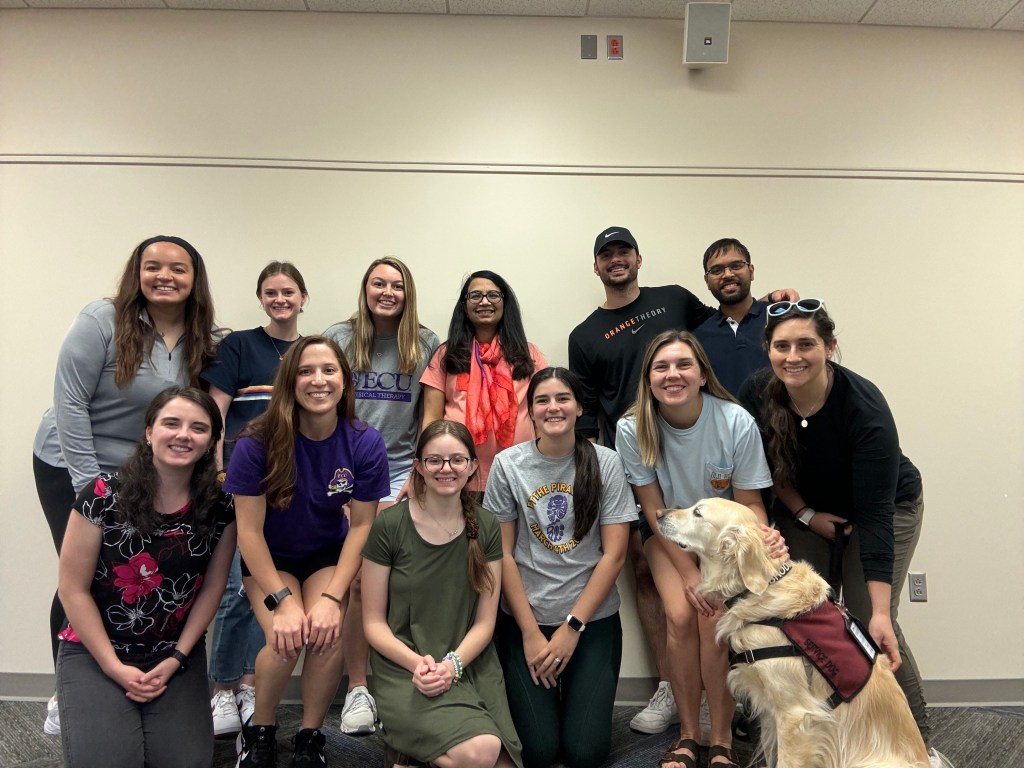
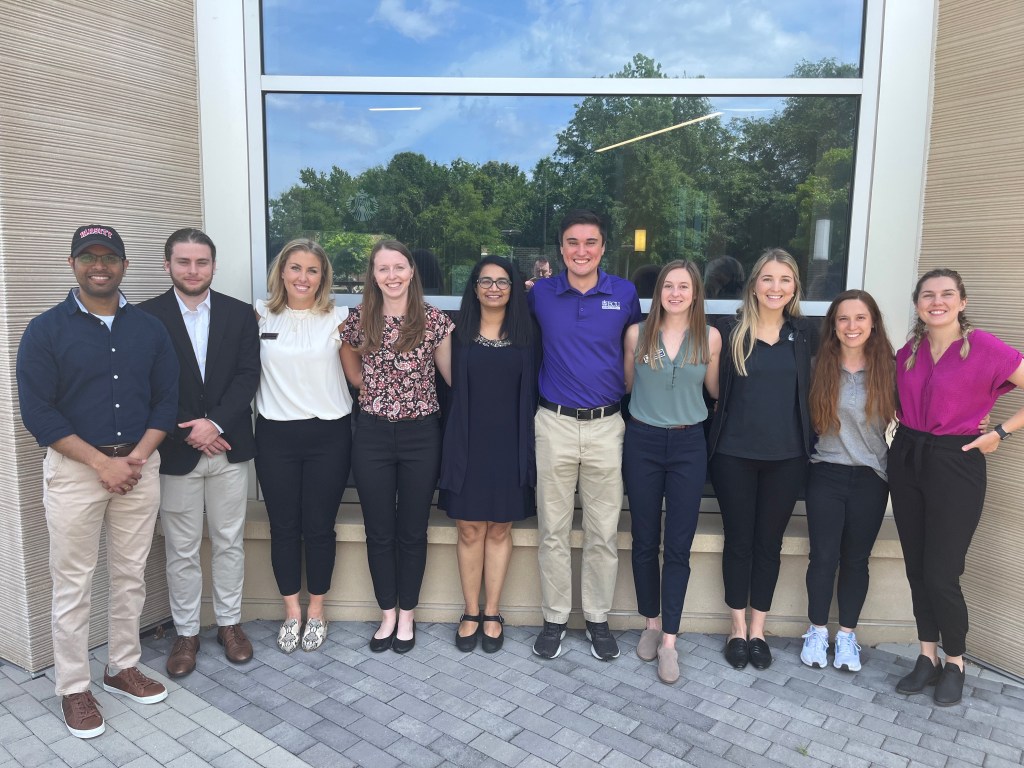
HABIT camp was the main project we were focused on during my time in the lab. People with hemiplegic cerebral palsy have strength, range of motion, and/or coordination impairments in their affected upper extremity. This often makes tasks requiring the use of both hands difficult for them. During HABIT camp, each child is paired with a small group of trained PT students and undergraduate volunteers who provide them with 5 days (7 hours per day) of intensive therapy encouraging them to use both hands together, rather than just their dominant one. There are licensed PTs and OTs on-site to supervise and assist students as needed. The therapy is play-based to keep the children engaged, and there are also different group activities throughout the day. Kids anywhere from age 6-16 can participate in the study. Throughout my time in the lab, we conducted 3 HABIT camps. During the first camp, I had not been working in the lab very long, so I primarily helped out with assessments and had a group during camp. During the second and third HABIT camp, I was much more involved in recruitment, planning, and other logistics.
Before and after camp, the research team completes a series of assessments with the child. We perform a variety of tests to assess corticospinal excitability, upper extremity function and strength, and bimanual coordination. These tests not only give us objective data, but they help us learn about the child’s impairments and start to formulate intervention ideas for their team to utilize during HABIT camp. I was a little overwhelmed by all of the different tests and equipment we use for the study when I first started working in the lab. Luckily, we had a great team who helped train and mentor me and Caroline and with their help and time, I became comfortable with all of the different components of the study. Assessment days are very long and challenging for the kids, but we always try to make it as fun as possible and give them lots of breaks! They are troopers!
HABIT camp itself is where we get to see everything come together and is definitely my favorite part of the whole process! The first day, each team meets the child they will be working with and their family and then get right to work! Each day starts with RLIC, and the rest of the day is filled with individual and group activities. Throughout camp, the kids wear wrist watches called accelerometers which track their arm movement/usage. The ideal goal is for both arms to be symmetrical. The data from the watches is processed after each day of HABIT which allows groups to see the child’s performance and determine if they need to modify their interventions.
HABIT camp is unique because you are working with the child for a long duration of time rather than for an hour long PT session. Camp really challenged my creativity as well as my ability to keep the child engaged. At first glance, it may seem like the child is just playing, but it is much more than that. The kids are working hard all day long! For example, when building a tower with legos, they are working on their ability to grasp and release an object, grip/pinch strength, reaching, and accuracy of movement. As therapists, our job is to pick and modify activities to make it attainable but also challenge them. The first two days of camp are usually the easiest because all of the toys/activities are new and both the kids and therapists have a lot of energy. The third day is when everyone starts getting tired, and it becomes more difficult to keep the child engaged. This is when we really have to start getting creative and finding things that motivate the child. This may be pairing up with a friend to play a game, doing an obstacle course, or having a competition. I would also try to save a few new activities to do later in the week when we were running out of ideas. Group activities also help keep the kids actively participating. We play noodle hockey and beach volleyball and have different relay races and minute-to-win-it competitions. The kids typically really enjoy these! My personal favorite activity is baking…kids (and adults 🙂 ) are always up for making a sweet treat!

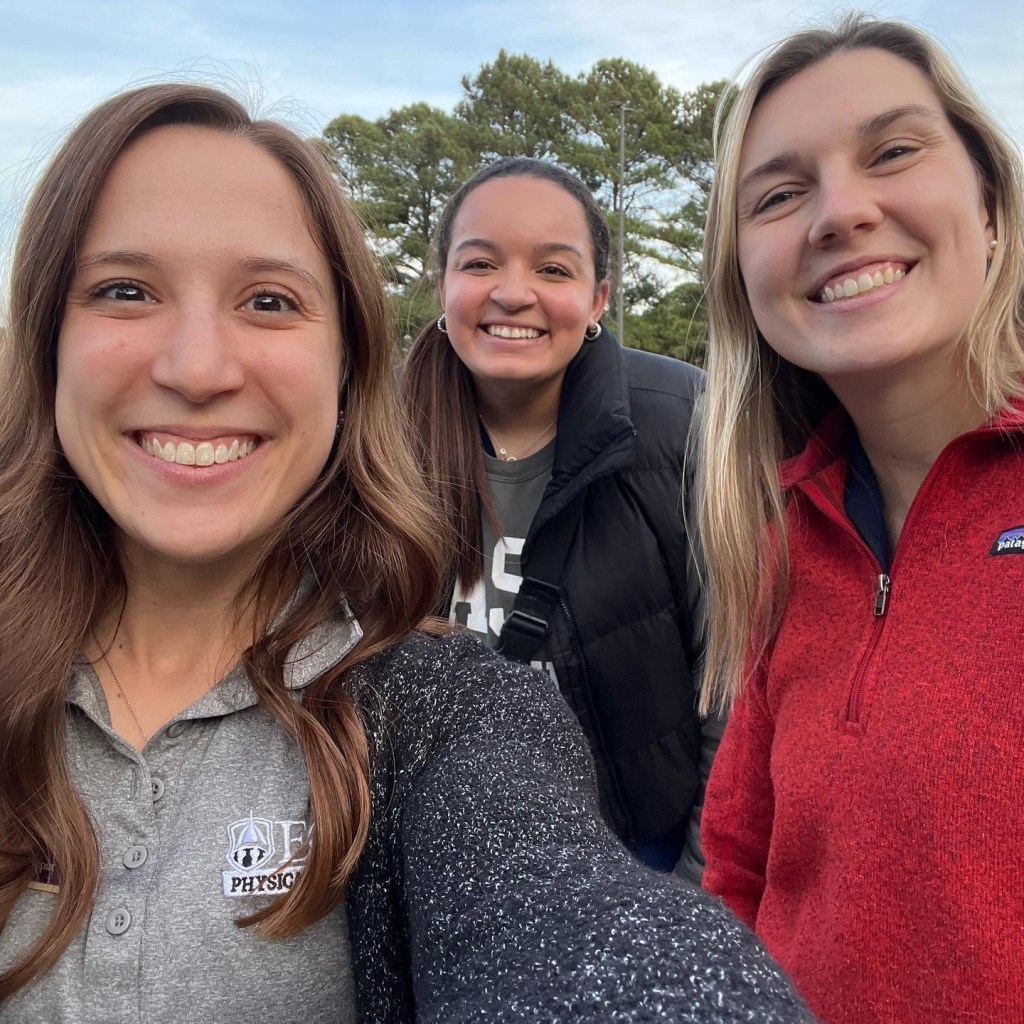
Being involved in the planning and execution of HABIT has given me such an appreciation for clinical research. I never realized just how much time and effort goes into a project like this. There is so much to do, and you have to start early. Recruiting participants for the study, interviewing and training volunteers for camp, performing assessments, creating groups, planning/scheduling activities, and setting up the space all takes time. Last year, we did two camps—one in August and one in December. After finishing the August one, we took a few weeks off and then started prepping for December. This made for a very busy last couple semesters of school, but all of time and effort put into this project is so worth it. Through assessments and then the week of camp, we really get to know the kids and their families, and it is so rewarding to see them improve and make progress towards their goals. I also love seeing the kids interact with and have fun with one another. Many of them have similar impairments and goals so seeing them realize they aren’t alone and helping each other improve is such a joy. I know I would have loved something like this when I was little!
Capstone Research
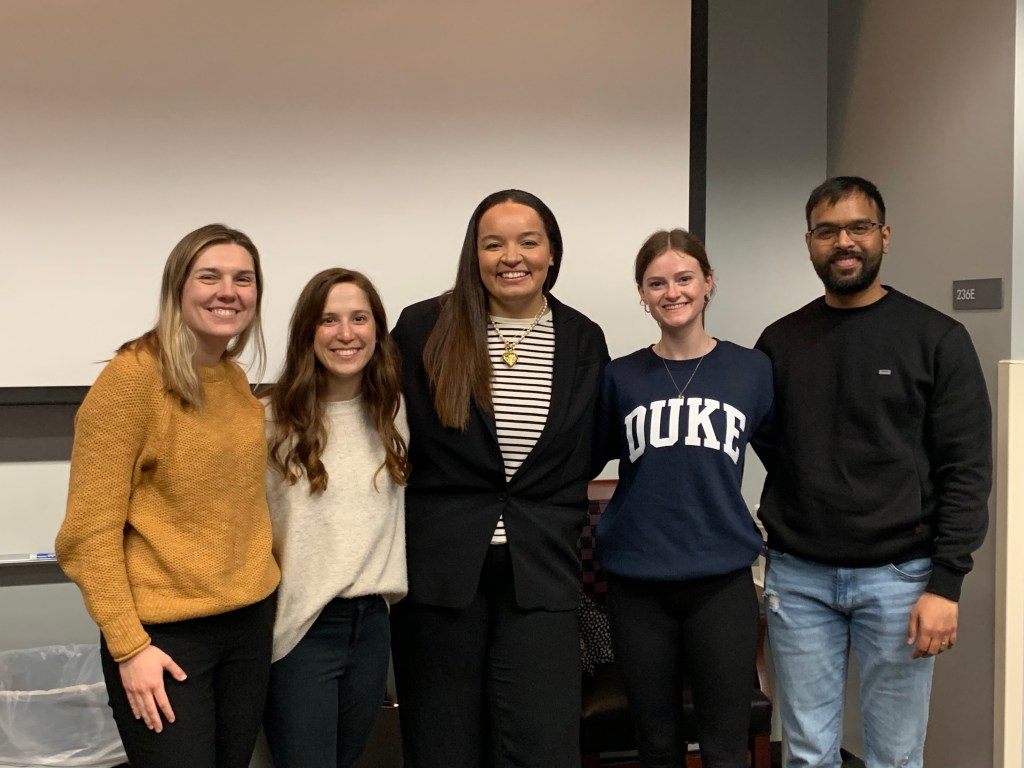
As part of our graduation requirements, we complete a research project. Caroline and I were able to do our project together, which I am very thankful for because we were both so busy with HABIT camp. Luckily, as graduate assistants we had basically been working on this project for the past 2 years, so all we had left to do was run some of the remaining data, write the abstract, and create our poster. Fortunately, we had a lot of help from our professor and a PhD student who worked in the lab. Writing an abstract was new to both me and Caroline, so I am very appreciative of all their help and guidance!
Our capstone project looked at the effects of a short versus an intensive bout of bimanual training on motor cortex plasticity. Motor cortex plasticity is the brain’s ability to form and re-organize neural connections, which is important after a brain injury. HABIT is a well-established intervention, but the effects of different doses of training is unknown. Basically, we wanted to see if a 1-2 hour session of bimanual training would improve plasticity and the affected hand function, as we know HABIT does. The short bout of training was 75 trials of cup-stacking (yes, that’s a lot of cup-stacking!) and the intensive bout was HABIT camp.
We utilized data collected from transcranial magnetic stimulation (TMS) and a hand function test to answer our research question. During TMS, a magnetic coil is used to stimulate the specific part of the brain responsible for hand movement to measure corticospinal excitability. Ideally, after training, it would take less stimulation for movement showing increased excitability. We found that the short bout of training was not enough to drive motor cortex plasticity and improve hand function. This demonstrates the importance of the dose of therapy and the need for intensive camps like HABIT. We presented our research at our university’s research day and two different conferences—NC APTA and APTA Combined Sections Meeting.
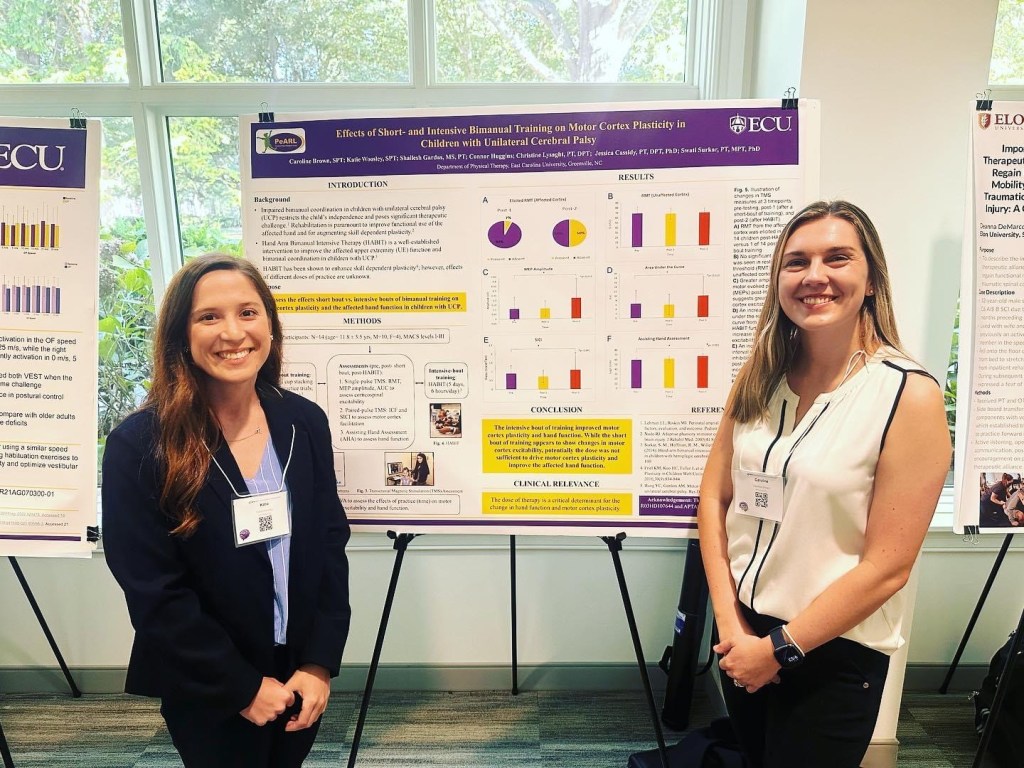

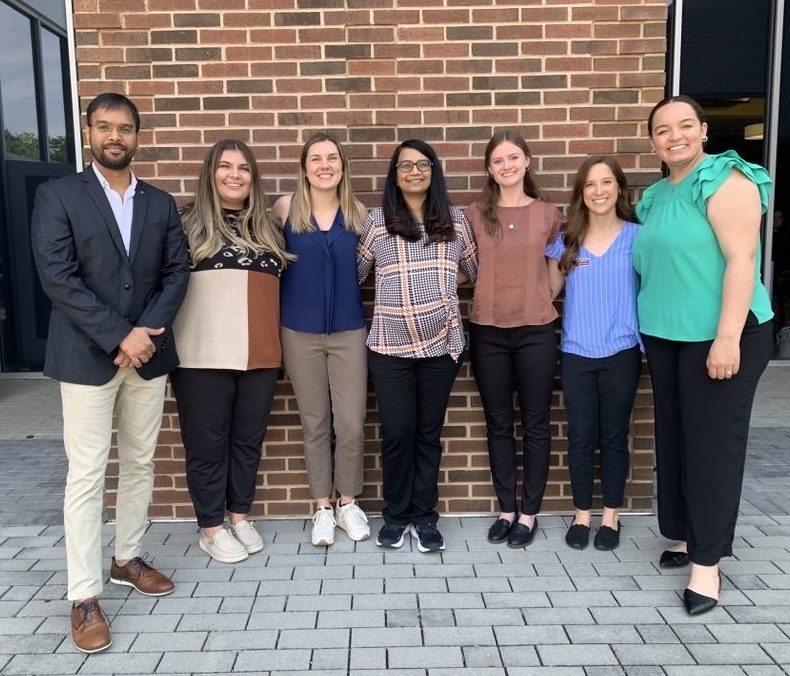
The APTA Combined Sections Meeting is a national PT conference hosted in February. This year the conference was in Boston. The conference was huge, with about 15,000 current and future PTs in attendance. It was neat to be surrounded by so many other people with similar interests. We were able to attend lectures on many different topics. They also have a huge exhibit hall full of equipment and new technology which was fun to learn about and try out. Let me tell you, life in Boston is completely different than North Carolina. I was not prepared for all the hustle and bustle and especially not the freezing temperatures. I quickly learned I was not cut out for the city life, but I had so much fun exploring with my classmates. We walked The Freedom Trail, explored the Boston library, and tried out so many coffee shops. Boston coffee is the best!


What I’ve Learned…
Recruitment is challenging! – One of the hardest parts of HABIT camp by far was finding participants, so we started this process very early. There are many inclusion/exclusion criteria, and it was difficult to find kids who fit it and were also available the week of the camp. We made a lot of phone calls, wrote a ton of emails, and reached out to pretty much every PT and OT we knew.
The questions are endless. – I didn’t realize you could answer so many research questions with one project until working in PeARL. Every HABIT camp we always had at least one new component to add to the study.
Organization is important. – Staying organized throughout this process was crucial both with data and the logistics of camp. We collect a lot of data, and it is easy for things to get mixed up or lost. We also had so many emails between recruitment of participants and communicating with volunteers for camp.
Have a plan, but be prepared to pivot. – HABIT camp consists of a lot of different variables and a lot of people between the kids and volunteers. We tried to make camp as organized as possible each year, but plans would frequently change and we always had to be prepared to modify as needed. The first camp was our largest, with 14 kids participating, which meant there were almost 60 people total when you add in volunteers. I remember many late night texts in our GA group chat trying to rearrange groups because volunteers could not attend or discussing different ideas for the following day.
Most importantly, teamwork makes the dream work! – With so much to coordinate and accomplish, having good communication and working together to divide and conquer was extremely important. Teamwork is what makes it all possible!
Being Finished is Bittersweet
If you would have told me 3 years ago I would be recruiting participants for a clinical trial or training a room full of student volunteers on a research protocol I would have laughed and said definitely not. Now, here I am 3 years later and I can confidently say working in PeARL has been one of the most influential and rewarding experiences of my PT school career. I absolutely loved working with the kids and seeing them progress towards their goals both with my own eyes and objectively in the data. I never thought I would be so passionate about a research project. Working in the lab was definitely challenging, but it helped me grow so much as a student, a leader, and a future physical therapist. Being able to be a part of each step of HABIT camp from recruiting participants all the way to collecting and organizing the data after camp has taught me so much about the research world, although there is still a lot to learn! Not only have I learned so much working in the lab, but I have also made many lasting connections and friendships which I am so thankful for! I will truly miss working in PeARL, but am excited to see all the team accomplishes in the future!
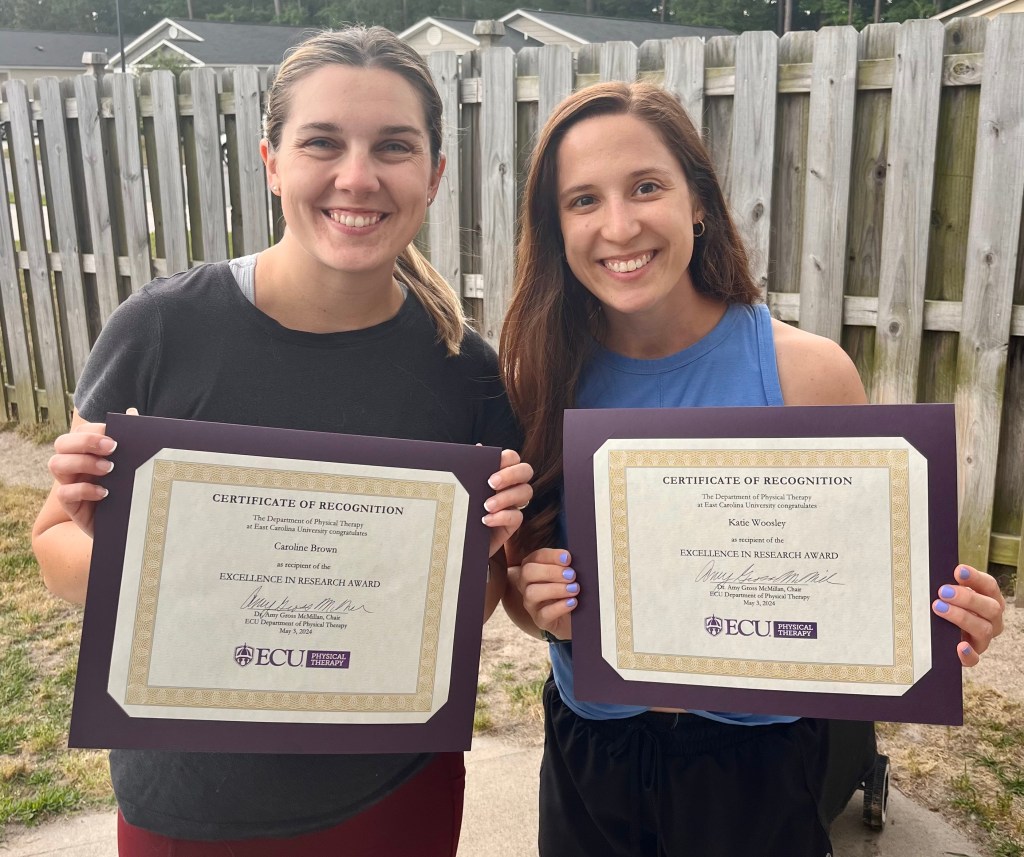
To learn more about the lab, studies, and the PeARL team follow this link to the website: https://cahs.ecu.edu/pearl/
 Katie Woosley
Leave a comment